Draganfly argues that drones are shifting to intelligence platforms. See defense demand signals, "made-here" trends, and recent AFSOC... ͏ ͏ ͏ ͏ ͏ ͏ ͏ ͏ ͏ ͏ ͏ ͏ ͏ ͏ ͏ ͏ ͏ ͏ ͏ ͏ ͏ ͏ ͏ ͏ ͏ ͏ ͏ ͏ ͏ ͏ ͏ ͏ ͏ ͏ ͏ ͏ ͏ ͏ ͏ ͏ ͏ ͏ ͏ ͏ ͏ ͏ ͏ ͏ ͏ ͏ ͏ ͏ ͏ ͏ ͏ ͏ ͏ ͏ ͏ ͏ ͏ ͏ ͏ ͏ ͏ ͏ ͏ ͏ ͏ ͏ ͏ ͏ ͏ ͏ ͏ ͏ ͏ ͏ ͏ ͏ ͏ ͏ ͏ ͏ ͏ ͏ ͏ ͏ ͏ ͏ ͏ ͏ ͏ ͏ ͏ ͏ ͏ ͏ ͏ ͏ |
| | Written by Bridget Bennett 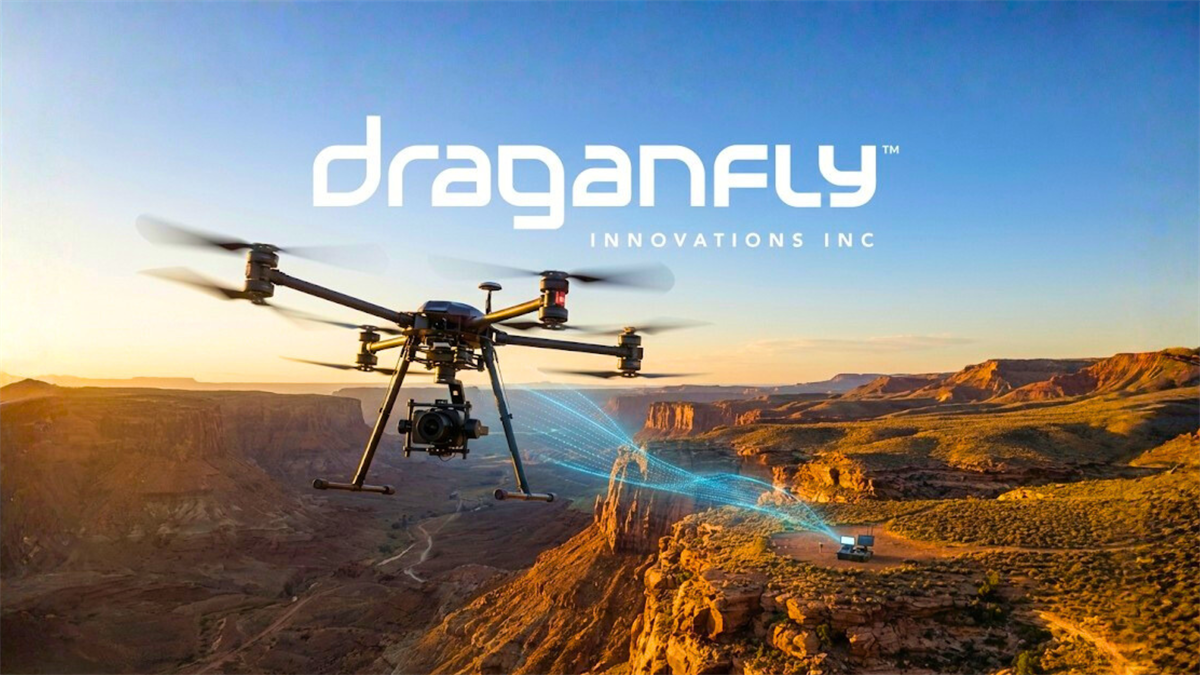
The drone industry’s latest rally has been fueled by a familiar cocktail: geopolitical urgency, rapid AI adoption, and an accelerating shift toward automation. In a recent MarketBeat conversation, CEO Cameron Chell laid out why Draganfly Inc. (NASDAQ: DPRO) believes the next chapter for drones won’t be defined solely by airframes—but by the data, intelligence, and operational capability built around them. Draganfly recently traded in the mid-$7 range, and Wall Street remains quite optimistic about its prospects as a small-cap company, with MarketBeat's consensus target near $16.75. From “Drone Makers” to Intelligence Platforms Asked about what’s driving investment across the sector, Chell framed drones as an evolution story—similar to the internet era, when early winners outgrew their original labels. His central point: the “endgame” may not be a hardware category at all. In Chell’s view, drones are uniquely positioned to become the dominant “real-world” data collectors—pulling in information ranging from imaging and environmental monitoring to specialized sensing that can be fed into AI systems. That combination, he argued, is what could separate a handful of eventual leaders from the pack: the companies that move beyond manufacturing and become information-and-intelligence businesses. The Pentagon’s “Drone Dominance” Demand Signal Defense has become the industry’s most visible catalyst, and Chell pointed to the scale of near-term demand as evidence that adoption is still early—despite the sector’s sharp stock moves. A major headline backing that narrative: in early December 2025, the Pentagon announced an initiative aimed at delivering 300,000 small drones over the next several years and strengthening domestic production capacity—an effort publicly described as “drone dominance.” The takeaway is simple: even one large program can strain the existing North American supply, and the broader re-arming cycle extends far beyond a single budget line. In Chell’s telling, the competitive moat is not just parts availability—it’s the ability to build, certify, scale, and support systems for mission-critical use. Why “Made Here” Is Becoming a Requirement, Not a Preference Another theme from the interview: drones are being “re-regionalized.” Nations want domestic or in-country production both for cost and for supply-chain security. Chell said Draganfly already operates manufacturing capability in both the United States and Canada—and expects that same multi-sovereign model to expand over time as countries prioritize domestic control. That push aligns with broader policy trends: restrictions on foreign-made drone tech have intensified, and national-security scrutiny has been rising. Canada’s Defense Push: What Chell Says Is at Stake Chell also highlighted a newly announced Canadian “Defense Industrial Strategy” and described it as another example of global re-militarization and sovereign manufacturing priorities. Some of the specific figures discussed in the interview were presented as management commentary rather than independently confirmed program allocations, but the strategic direction is clear: Canada—like many allies—is moving toward deeper domestic capability and faster procurement cycles. A Concrete Win: Training + FPV Drones for U.S. Air Force Special Operations One of the most actionable parts of the conversation centered on Draganfly’s recent selection—alongside partner DelMar Aerospace—to provide Flex FPV drones and training to units within U.S. Air Force Special Operations Command (AFSOC). The structure matters. It isn’t framed as a simple hardware shipment; it’s capability delivery—platform plus instruction—conducted at DelMar’s Camp Pendleton UAS training facility. Chell described Draganfly’s experience and battlefield learnings—particularly from Ukraine—as a key differentiator for training and product iteration. For investors, that’s a notable angle because it expands the addressable opportunity beyond unit sales into services, repeat cohorts, and operational integration. Beyond Defense: The Commercial Use Cases Are Getting Practical While defense is driving headlines, Chell emphasized momentum in public safety and industrial markets—where ROI is often easier to quantify. He cited examples such as: - robotic solutions for wind-turbine maintenance work,
- drones used in and around cell-tower restoration and emergency response,
- tools deployed onto power lines for monitoring and data collection.
The common thread: drones replacing slow, risky, and expensive workflows that traditionally required crews, harnesses, helicopters, or complex logistics. The Investor Question: Has the Run Already Happened? Draganfly is a reminder of how quickly sentiment can shift in emerging categories—especially when government budgets and policy tailwinds collide with AI narratives. But Chell’s argument was that the “beginning of the beginning” is still unfolding: major militaries spent decades experimenting with drones, yet the first truly large and structured procurement waves are only now becoming visible at scale. Whether that plays out cleanly will depend on execution—manufacturing ramp, reliability, regulatory compliance, and the ability to win repeat business in a crowded field. Still, the combination of a large U.S. demand signal, nationalized supply-chain trends, and real contract wins helps explain why analysts remain constructive.  Read This Story Online Read This Story Online |  While investors have scrambled to keep up with AI chip stocks, a quieter shift is unfolding just beneath the surface – and it's transforming how we work, where we work, and what we consider "the office."
One emerging company is already powering this movement with technology that enables teams, executives, and developers to work side-by-side – in real time – inside fully immersive virtual environments.
What started with a few thousand users has expanded rapidly, growing to over a million users and attracting funding from names that matter – including Tim Tebow and insiders from Intel, Palantir, and more. Discover the technology reshaping remote work before Wall Street wakes up |
| Written by Chris Markoch 
Let’s not bury the lead. Booking Holdings Inc. (NASDAQ: BKNG) announced a 25-for-1 stock split effective April 2. Stock splits don’t change the intrinsic value of a company. However, BKNG stock trades for over $3,900 per share. That’s a lot of friction for retail investors. The split removes a significant amount of that friction and may invite strong retail sentiment. The stock split announcement was part of Booking’s Q4 2025 earnings report. The company beat on the top and bottom lines with earnings per share (EPS) of $48.80 on revenue of $6.35 billion. Those numbers were 17% and 16% higher on a year-over-year (YOY) basis. Another highlight of the report was that room nights were up 9% YOY, and the company’s gross bookings were up 16% YOY to $43 billion. Booking also delivered solid guidance for the current quarter. It projects revenue growth between 14% and 16% and adjusted EBITDA growth between 10% to 14%. On a constant-currency basis, revenue growth would be between 7% and 9%, lower than the 11% generated in the current quarter. A Strong Quarter Isn't Enough to Shake AI Fears Despite the positive headline news, BKNG stock dropped 8.69% at the market open on Feb. 19, the day after Booking reported. That reverses what looked like a recovery from a bearish trend that started in July 2025. The stock is down 26.5% in 2026 and is trading near a 52-week low. The pullback has been due, in part, to concerns over the impact of artificial intelligence (AI) on the company’s business. Specifically, some analysts believe that Booking may be prone to AI disintermediation. That means that big tech companies, such as Alphabet Inc. (NASDAQ: GOOGL), that are leading in agentic AI could create products and services that bypass companies like Booking entirely. For example, Alphabet launched a significant update to its AI Search/Travel Mode in late 2025. This update allows AI agents to book trips for travelers inside the Google ecosystem. A secondary concern is the impact this has on Booking’s marketing spend. The company has been increasing its spending on sponsored links to maintain its online visibility. Booking's Real Moat: Data, Loyalty, and Friction-Free Booking The counterargument for investors is that Booking will be able to use AI to enhance its existing business model. The company has years, if not decades, of consumer behavioral data, electronic connectivity with millions of accommodations, and a vast payment network. All of which creates a frictionless experience for travelers, and one they’ve grown accustomed to using. The advantage that Booking may have is that offerings such as the one from Google will have to give consumers a reason to shift. If it’s the same experience on a different platform, that won’t be enough, unless they can provide the trip for a lower price, which is dubious. Booking has years of goodwill built up. The quarter’s results show that it’s using that capital wisely. Wall Street Lowers Targets But Hasn't Given Up on BKNG The Booking Holdings analyst forecasts on MarketBeat show that analysts are wasting no time rendering their opinion on BKNG stock. For now, price targets are being lowered, with many coming in below the Street’s consensus price target—around $6,000. Still, that consensus price is more than 50% above the stock’s price as of this writing. That leaves plenty of room for stock price growth in the short term. Another encouraging sign is that institutional ownership, which has been exceedingly bearish by dollar volume for most of last year, showed signs of reversing that trend in the just-completed quarter. Buying volume of around $28 billion eclipsed selling volume by nearly a 3:1 ratio. The solid report, combined with news of the stock split, may be the trigger for more stock purchases in 2026. That brings us back to the stock split. A Long-Overdue Stock Split—But Timing Is Everything Booking has been one of the priciest stocks in the market. This isn’t about valuation. At around 20x next year’s earnings, BKNG stock is trading at a discount to itself as well as a slight discount to the S&P 500. This is about the price per share. Even with the slide of over 25% this year, the stock trades for over $3,900 per share as of this writing. Many investors will simply find that to be too pricey for one share. Plus, many investors don’t want to own fractional shares. Many analysts have felt a stock split was long overdue, and the news may have a negative impact in the short term, as Booking is making the announcement in a period of weakness. Some other stocks, such as Walmart Inc. (NYSE: WMT), have made similar announcements at times when their stock was closer to 52-week highs. Read This Story Online |  Before Netflix, cable TV was the default. Before the iPhone, most people thought Blackberry was the standard. Before cloud computing, on-premise data centers felt permanent. There's a pattern to every major tech shift.
Today, a new "normal" is emerging. Over 1.5M professionals are spending 40 to 60 hours a week inside this platform.
And here's what's surprising: Shares in the company behind it are still available to retail investors... for just $0.66/share Watch this short video before the round closes |
| Written by Sam Quirke 
Tesla Inc (NASDAQ: TSLA) once again finds itself balanced on a knife-edge, but the backdrop feels different this time. The headlines have turned cautious, delivery data looks soft, and critics argue that the electric vehicle growth story is losing momentum. However, at the same time, there is a growing sense that Tesla is no longer valued purely as an EV manufacturer, and that shift changes how much declining sales actually matter. Sure, heading into the second half of Q1, the raw sales data says caution, as deliveries have fallen by double digits again. From an EV-only point of view, those numbers argue for restraint. Yet the stock continues to keep its head above water and remains in the uptrend that began last April. That uptrend has been tested in recent weeks, but the bears have repeatedly failed to push shares below the post-earnings dip around $390. Given the price refuses to lean into a bearish narrative, it suggests the market may already be looking past the EV slowdown. Here’s how to think about the opportunity with Tesla right now. The Bear Case Is Clear First things first. Declining delivery volumes month over month is not a trivial issue. Slowing demand, inventory build, and margin compression are legitimate risks for any automaker, even one as vertically integrated as Tesla. Investors who focus purely on auto fundamentals can draw a straightforward conclusion: sales are falling; therefore, earnings pressure should follow. There is also the reality that EV competition continues to intensify globally. Pricing adjustments and incentives are no longer seen as strategic levers; they feel more like panic buttons. Viewed in isolation, Tesla’s core auto business does not inspire much hope in further share price appreciation. Tesla, however, has always traded on its future growth potential rather than past performance—and that’s where the bear case starts to crumble. “Amazing Abundance” Changes the Frame On last month’s earnings call, CEO Elon Musk introduced what he described as a new mission for the company: “Amazing Abundance.” That framing signals a structural pivot away from Tesla as primarily an auto manufacturer and toward Tesla as a robotics and autonomy platform. Musk argued that Tesla’s Optimus humanoid robots could eventually reshape U.S. economic output and have a meaningful impact on GDP. This isn’t incremental upside layered on top of core EV growth potential—it points to a fundamentally different total addressable market. To underscore the seriousness of the shift, Tesla is sunsetting the Model S and Model X this year and reallocating production capacity toward Optimus. That is real capital being redeployed, not just rhetoric being offered on a conference call. It signals that management is putting its money where its mouth is and positioning autonomy and robotics as the next chapter of value creation. For investors, this reframes the question. If Tesla can successfully execute this pivot from an EV growth story into a robotics and AI manufacturing leader, recently, volatility in its delivery numbers will become almost meaningless. Analysts Are Leaning Into the Pivot The sell-side reaction reflects this evolving narrative. Tigress Financial upgraded the stock from Neutral to Buy last week and set a $550 price target, implying roughly 35% upside from current levels. That call echoes reiterated Buy ratings from Benchmark and Deutsche Bank in recent weeks. Importantly, this bullish positioning is occurring even as sales headlines remain negative, suggesting analysts are backing the company to successfully make the pivot. How to Play the Setup The key question for investors right now is the time horizon. Those with a short-term horizon will be focused on quarterly delivery data, where volatility is likely to remain elevated. For at least the next few quarters, sales trends will continue to drive headlines, and any further weakness there could spook investors. But for those willing to think in multi-month, if not multi-year, terms, the robotics thesis is beginning to take shape. If Tesla can demonstrate tangible progress on Optimus production, autonomy deployment, and AI integration into its manufacturing processes, the market will increasingly price that company based on its future robotics cash flows rather than present auto numbers. If the stock can continue to hold support around the $390 mark in the coming weeks, it would confirm that the market is willing to look past EV softness. In that scenario, the path toward $500 and beyond becomes plausible. If, on the other hand, $390 fails and the uptrend from last April breaks cleanly, the bulls will have blinked, suggesting the market is not yet ready to fully embrace the robotics pivot. Read This Story Online |  Most private tech deals sell a dream. This one has receipts.
It built the #1 work app on Meta Quest, where 1.5M+ professionals are logging 40 to 60 hours a week inside a virtual workspace. This isn't based on assumptions. The usage is already there. Now the company is building on that foundation.
You can still invest at $0.66/share, before a potential IPO. Watch this short video before the round closes |
| More Stories |
| |
|
|