| Written by Chris Markoch 
Evolv Technologies Inc. (NASDAQ: EVLV) is a leader in AI weapons/gun/concealed weapon detection. The company delivered its fourth-quarter earnings report after the market closed on March 10. The results were solid, starting with a double beat on the top and bottom lines. Revenue for the quarter came in at $38.50 million, topping the forecast of $36.44 million by 5.65%. The bigger story, however, was the company’s bottom line. Adjusted earnings per share came in at 6 cents, well ahead of expectations for a loss of 8 cents per share. Investors seem to be taking a wait-and-see approach. EVLV stock was up modestly in the session following the report, recovering from a loss of more than 2% at the open. It's not unusual for a stock that trades near $5 per share to see significant volatility in either direction. That’s been the case for EVLV stock, which is up more than 60% in the past 12 months but was down over 25% in 2026 heading into earnings. At a time when many technology stocks, particularly those related to AI, are getting battered, it’s important to understand what Evolv does and why AI isn’t just an add-on service; it’s an integral part of the business case. How Evolv Uses AI to Modernize Security Screening The keyword to understanding Evolv’s approach is frictionless. Evolv builds AI-powered weapons-detection systems that let people walk through security checkpoints without stopping to empty their pockets or bags. This replaces the old metal-detector experience with fast, frictionless entry at places like schools, stadiums, hospitals, and theme parks. Its systems combine advanced sensors with AI to analyze the signatures of guns, knives, and other weapons as people move through, then highlight potential threats, showing security personnel exactly where to check instead of triggering a generic alarm. Evolv differentiates itself by focusing on speed, letting crowds flow at much higher throughput than traditional checkpoints while using AI pattern recognition to distinguish likely weapons from everyday items, which is designed to cut false alarms and add context, including some non-metal threats and richer situational awareness. Strong Revenue Growth and Recurring Revenue Momentum The proof is in the company’s growth. Quarterly revenue was up 32% year-over-year (YOY). This growth was driven by new customers and the expansion of deployments across its existing customer base. That growth is also reflected in the company’s annual recurring revenue (ARR), which came in at $120.5 million in the quarter, an increase of 21% YOY. Evolv also raised its 2026 full-year guidance. The company is forecasting total revenue in the range of $172 million to $178 million, which would be YOY growth of around 20% at the mid-point. Of that revenue, Evolv forecasts $145 million to $150 million in ARR, representing YOY growth of around 22.5% at the midpoint. One driver of that growth is the company’s two-pronged business model. Customers can choose a pure subscription model or a purchase-subscription model. The pure subscription model keeps customers from buying the hardware outright; instead, they pay an all-in recurring fee that bundles the equipment, software, updates, service, and maintenance into one contract. In the purchase-subscription model, customers still pay recurring software and service fees, but the commercial structure can separate or front-load more of the hardware cost, making the subscription portion relatively lower and more software-like. In 2026, Evolv expects approximately 50% of its new unit deployments to be under the pure subscription model, with the remaining 50% deployed through its purchase-subscription model. EVLV Stock Is a Speculative Play That Could Still Work Out Investors should have absolute clarity about what they own with EVLV stock. Revenue is growing, but can be lumpy. Evolv delivered profitable earnings this quarter and expects to have its first full year of positive adjusted EBITDA, with margins in the high single digits. But the company will have to prove it can be consistently profitable for the stock to gain traction. Adding to the headwinds is the competitive landscape. It’s fair to question the company’s moat. There are several companies competing in the AI-enabled weapons-detection and security-screening sector. However, the need for the company’s products and services is, sadly, increasing. Evolv generated $145.90 million in revenue for all of 2025. The total addressable market for the company is forecast to be between $2 billion and $3 billion by 2030, depending on how the AI weapons/gun/concealed weapon detection area is defined by scope and methodology. That leaves enough room for multiple names, and much of Evolv’s revenue comes from ARR, which is contracted over long periods. Put it all together, and this is a speculative stock that is valued correctly at this time. Investors should be aware of the risks, but risk-tolerant investors may have a long-term opportunity.  Read This Story Online Read This Story Online |  Hedge funds like AQR, Man Group, Citadel, and DE Shaw have long relied on a specific market phenomenon as a cornerstone of their portfolio strategies. According to research published in the Institutional Investment Journal, stocks driven by this phenomenon haven't posted a losing decade since 1887. Now a trading system built around this approach is identifying one high-conviction setup each morning before the market opens — giving everyday traders access to the same edge institutions have used for decades. Recent flagged trades have included names like NVDA, TSLA, GOOG, AEM, and TTWO. See the Next Trade Flagged by This Institutional Phenomenon |
| Written by Jeffrey Neal Johnson 
A distinct chill has settled over the electric vehicle (EV) market. After years of supercharged, triple-digit expansion, the industry is navigating a period of slowing sales growth and heightened investor caution. This EV Winter has seen automakers recalibrate ambitious production targets and engage in aggressive price wars to spur demand. Yet, amidst this cooling sentiment, a compelling counter-current is forming around Rivian Automotive, Inc. (NASDAQ: RIVN). The electric adventure vehicle maker is attracting a wave of positive attention from Wall Street analysts, signaling a potential decoupling from broader industry trends. The source of this renewed optimism is clear and singular: the imminent launch of the R2 platform, a vehicle poised to move Rivian from a niche player into the mass market, creating a powerful narrative for investors seeking the next phase of EV growth. The Rivian R2 Could Be a Defining Moment for Rivian Automotive The growing confidence in Rivian's trajectory was put into sharp focus on March 10, 2026, when TD Cowen upgraded the stock to Buy and raised its price target to $20. This move is part of a broader, more favorable trend, with firms like Deutsche Bank (NYSE: DB) and UBS (NYSE: UBS) also recently issuing positive revisions. For investors, these upgrades are significant signals. They indicate that, after scrutinizing the data, financial experts see a clear path to future growth that may not yet be fully reflected in the stock's price. The conviction behind these calls is rooted in the strategic importance of the R2 platform. The new midsize SUV is designed to enter the heart of the consumer market with a more accessible starting price point of around $45,000, creating a direct and fresh competitor to best-selling vehicles like the Tesla Model Y. Analysts see this launch as Rivian's Model 3 moment—a direct parallel to the vehicle that transformed Tesla (NASDAQ: TSLA) from a luxury automaker into a global powerhouse. Before the Model 3, Tesla was a high-risk, unprofitable company selling a small number of expensive cars. The Model 3's successful production ramp proved Tesla could scale, generate billions in revenue, and achieve sustained profitability, an inflection point that forever changed its valuation. Wall Street is now betting that the R2 can serve the same purpose for Rivian. A successful launch would not only add a new revenue stream but also fundamentally expand Rivian's total addressable market and serve as a powerful near-term catalyst for growth. Product Cycle Divergence: New Metal vs. Next-Gen Tech Part of the growing bullishness for Rivian stems from a clear divergence in strategy and timelines when compared to the current market leader, Tesla. The R2 is a new physical vehicle launching into a high-demand segment, with customer deliveries expected to begin in the second quarter of 2026. This provides a clear, measurable driver for revenue growth in the immediate future and injects new excitement into a market hungry for compelling alternatives. Tesla's narrative, in contrast, is increasingly focused on the long term. Its globally dominant Model 3 and Model Y lineup, while immensely successful, is now several years into its lifecycle and facing intensifying competition. Tesla's dialogue with investors is more focused on future-facing, harder-to-value projects, such as achieving full self-driving, developing the Optimus robot, and harnessing artificial intelligence (AI). While these endeavors hold massive potential, their path to generating significant revenue is measured in years, not quarters. This difference in focus creates a strategic opening. For investors seeking near-term growth tied directly to vehicle manufacturing and sales, Rivian’s focused product cycle presents a compelling alternative, forming the basis for a potential anti-Tesla trade. How Rivian Plans to Win The most significant question for any growth company is its path to profitability, and here, Rivian is providing tangible evidence of progress. While Rivian posted a net loss in 2025, a deeper look into its financial results reveals a crucial turning point: for the first time, Rivian achieved a full year of positive consolidated gross profit, an improvement of more than $1.3 billion over the prior year. This is the direct result of Rivian’s disciplined execution. Rivian reported an impressive year-over-year improvement of approximately $9,500 in its automotive cost of goods sold per vehicle, demonstrating its ability to streamline manufacturing and manage its supply chain effectively. This financial foundation is being strengthened by a multi-pronged strategy. The high-volume R2 platform is specifically designed to leverage economies of scale, a classic manufacturing principle where costs per unit decrease as production volume increases. Rivian is also building a diversified and high-margin revenue stream through its software and services segment. Its joint venture with the Volkswagen Group (OTCMKTS: VWAGY) is already contributing significantly, generating $447 million in revenue in the fourth quarter of 2025 alone and providing a stable source of income that is not solely dependent on vehicle sales. The inherent value of Rivian's technology was recently highlighted when Mind Robotics, a company spinout utilizing its AI and robotics IP, raised $500 million at a $2 billion valuation. These data points show that Rivian is not just a company with an exciting product, but one that is actively building a financially sustainable business model. The R2 Reveal: Rivian's Moment of Truth The renewed analyst conviction in Rivian is not based solely on speculation; it is rooted in measurable improvements in cost control and the strategic launch of a potentially category-defining product. The R2 launch positions Rivian as a compelling, product-led growth story at a time when the market leader's attention is increasingly directed toward longer-term technological ambitions. The upcoming R2 reveal is more than just a vehicle launch; it's a critical data point for investors. The market's reception, coupled with Rivian's ability to execute its production ramp, will likely determine if this wave of bullish sentiment can propel Rivian into the next tier of global automakers. Read This Story Online |  U.S. Investors Racing to Tap Massive U.S. Government Silver Hoard
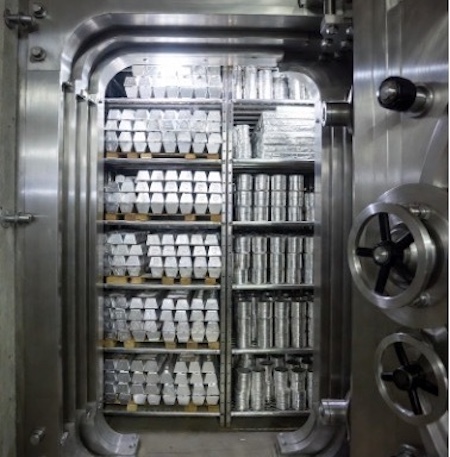
Between 1932 and 1964, the government acquired thousands of tons of silver. 90% pure. Certified by the U.S. Treasury.
Today, this hoard has shrunk by 75%... as Americans have raced to secure their share. The crazy thing about this hoard is, you can tap into it and acquire real, hold-in-your-hand silver for as little as $6.
One former CIA analyst just exposed the whole thing - including how to get his research, how to acquire government silver and what to ask for. See his full report here. |
| Written by Jennifer Ryan Woods 
U.S. consumer spending has remained resilient, but there is a growing divide in who is spending and what they're spending on. In what many economists describe as a K-shaped economy, higher-income households have continued to prosper, allowing them to spend freely, while lower-income consumers have scaled back as elevated prices, lagging incomes, and rising debt have taken a toll. As many households look to trim expenses, shoppers are increasingly turning to discount chains and warehouse clubs to get more bang for their buck. Over the past year, retailers such as TJX Companies (NYSE: TJX), Ross Stores (NASDAQ: ROST), Dollar General Corp. (NYSE: DG), and Burlington Stores, Inc. (NYSE: BURL) have benefited from this shift, and there may be further upside ahead. Many analysts remain bullish on these retailers, and if gas prices rise sharply due to the escalating conflict with Iran, it could further increase consumers' need to seek out bargains. For investors looking to benefit from the shift toward a more price-conscious economy, three ETFs that provide exposure to value-oriented companies can be an effective way to participate in the trend. XLY Offers Broad Consumer Exposure Plus Key Value Retailers The Consumer Discretionary Select Sector SPDR Fund (NYSEARCA: XLY) provides exposure to retailers benefiting from shifting consumer spending while still capturing the broader consumer discretionary sector. The portfolio's fifth-largest holding is TJX, the company behind discount darlings TJ Maxx, Marshalls, and HomeGoods. The 4% holding of TJX provides XLY investors with a meaningful way to gain exposure to the discount retail trend. TJX has risen more than 30% over the last year, and analysts remain overwhelmingly positive. XLY also has a 1.5% weight in discount retailer Ross Stores, which has surged more than 50% over the last year and is up 15% year-to-date, with analysts maintaining a bullish outlook. It's important to note that XLY is not a pure discount retailer play. The fund is concentrated in a handful of consumer discretionary stocks across several industries. The two largest holdings, Amazon.com Inc. (NASDAQ: AMZN) and Tesla Inc. (NASDAQ: TSLA), together account for roughly 40% of the portfolio. XLY has a net expense ratio of just 0.03%, which is lower than the average 0.58% for consumer discretionary ETFs. This highly liquid ETF is currently trading around $115 per share, up more than 15% over the last year, though it's down nearly 4% year-to-date. XRT Provides Diversified Exposure Across the Retail Sector Investors seeking more targeted, less top-heavy retail exposure may prefer SPDR S&P Retail ETF (NYSEARCA: XRT). XRT provides broad exposure across the retail sector and is equally weighted, allowing mid-sized companies to have a greater impact on performance. The top 25 holdings each account for roughly 1.5% to 1.8% of the portfolio. XRT holds a number of warehouse clubs, including PriceSmart Inc. (NASDAQ: PSMT), BJ's Wholesale Club (NYSE: BJ), and Costco Wholesale Corp. (NASDAQ: COST). It also holds several discount retailers, such as Dollar General Corp. (NYSE: DG), Burlington Stores Inc. (NYSE: BURL), and Five Below Inc. (NASDAQ: FIVE). This ETF is highly liquid and has a net expense ratio of 0.35%, which is higher than XLY but still below the sector average. Over the last year, XRT has had a strong run, rising more than 15%. However, it has slipped roughly 2% year to date and is currently trading around $83. RTH Targets Retail Industry Leaders For those interested in an ETF focused solely on retail, the VanEck Retail ETF (NASDAQ: RTH) may be a good option. RTH holds 25 large U.S. retail companies, many of which perform well when consumers become more price sensitive. Some of the value-focused holdings include Costco, TJX, Ross Stores, and Dollar General. It's worth noting that the fund's two largest holdings, Amazon and Walmart (NASDAQ: WMT), account for nearly 30% of the fund, giving investors significant exposure to these dominant retailers that often gain market share as consumers become more budget-conscious. RTH's targeted exposure to many of the sector's largest and most influential companies has worked in its favor, as it has performed the best in the bunch recently. The ETF is up nearly 17% over the last year and about 3% year-to-date. It is currently trading around $260 per share. The ETF's net expense ratio of 0.35% is on par with XRT, though it's below the sector average. RTH is much less liquid than either XLY or XRT, trading around 5,500 shares per day. Read This Story Online |  Every morning before the market opens, an AI scoring engine analyzes 357 stocks across 6 dimensions — the same dimensions used by the world's greatest investors.
Buffett-style quality. Deep value. Macro trends. Upcoming catalysts. Smart money flow. Technicals.
Each stock gets a score from 0 to 10. The top 10 make the list. *See Today's Top 10 AI-Ranked Stocks* |
|