

Elon Musk Warns of America's $36 Trillion Dollar Debt Bomb
The system is crumbling, protect your wealth or suffer the fallout.
Elon Musk has avoided two major financial crises before. He pulled Tesla and SpaceX back from the brink of collapse and built two of the most valuable companies in history.
Now, he's sounding the alarm about America's $36 trillion debt time bomb that could destroy the fabric of our society. While head of the Department of Government Efficiency (DOGE) under President Trump, Musk exposed just how bad things are:
✅ Runaway government spending has pushed national debt to unsustainable levels
✅ The Federal Reserve's rate hikes are squeezing the economy, making inflation irreversible
✅ The stock market is on shaky ground, putting traditional 401(k)s, IRAs, and TSPs at risk
With Trump back in charge, major spending cuts are coming. While necessary, these cuts may send shockwaves through Wall Street, creating unpredictable market turbulence.
That's why financial elites aren't waiting to react, they're moving their wealth now.
For the everyday American who's worked hard to build their nest egg, Trump preserved a IRS loophole that allows you to protect your retirement savings before billions in American wealth are lost.
Download Your Free 2026 Wealth Protection Guide and execute the simple steps to protect your future.
History proves those who act first always fare best. Will you be ready?
>>Get Your Free WEALTH PROTECTION GUIDE<<

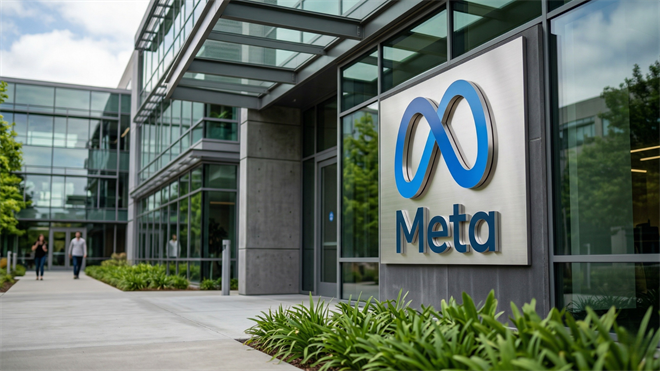
Why Meta's "Bellwether" Legal Loss Could Open up a Can of Worms
Written by Leo Miller. Article Published: 4/4/2026.
Key Points
- Meta Platforms made headlines after courts in New Mexico and California issued legal rulings against the company.
- Despite paying damages in California that are a rounding error compared to Meta's financials, the case introduces real risk ahead.
- Still, Morgan Stanley remains confident in the stock, naming Meta a "top pick."
- Special Report: Elon’s “Hidden” Company
The legal system just sent a shockwave through shares of the Magnificent Seven giant Meta Platforms (NASDAQ: META). The company lost two cases, one in New Mexico and another in California, prompting notable declines in the stock.
For a company of Meta’s size, the nearly $400 million in damages is relatively small. But markets are concerned about the longer-term implications these rulings could create.
The Biggest IPO Ever: Claim Your Stake Today (Ad)
What if you could shrink your entire wealth journey from decades down to just 24 hours?
Sounds impossible…
But I’ll show you how Elon Musk is about to make it a reality.
This could be the best investment opportunity of the decade.Investors shouldn’t dismiss Meta’s legal troubles. They could lead to further substantial liabilities, and negative sentiment from continued losses could weigh on the stock—especially as many market participants are already skeptical of massive AI capital spending across Big Tech.
“Bellwether” California Case Tanks Meta Stock
New Mexico ordered Meta to pay $375 million in civil penalties, finding the company liable for “misleading consumers about the safety of its platforms and endangering children.” Meanwhile, a California jury found Meta and Google parent company Alphabet (NASDAQ: GOOGL) liable for $6 million in damages in a social media addiction case. Meta was allocated 70% of the liability, or about $4.2 million.
Despite the larger payment in New Mexico, markets appear more worried about the precedent set in California.
Notably, the day after the California verdict, Meta shares fell nearly 8%, compared with a roughly 2% drop after the New Mexico decision.
Experts call the California case a "bellwether." As NPR notes, “It represents the first time a jury has found that social media apps should be treated as defective products for being engineered to exploit the developing brains of kids and teenagers.”
Billions of Penalties and Fees Could Follow, Worsening Weak Sentiment
The novel legal theory used in the California case opens the door for thousands of similar suits. Roughly 2,000 pending cases rely on comparable legal interpretations.
If Meta were to lose 2,000 cases at $4.2 million each, damages would total about $8.4 billion—equivalent to roughly 17% of the $46.1 billion in free cash flow the company generated in 2025. That estimate doesn’t include large legal fees Meta could incur defending itself or the possibility that additional plaintiffs could bring more claims.
Meta expects to spend between $115 billion and $135 billion on capital expenditures in 2026 to support its AI ambitions. With that level of spending putting pressure on free cash flow, further multi-billion-dollar legal losses would be an unwelcome strain.
Investors will have to see whether future cases repeat the California ruling. Meta plans to appeal both verdicts; successful appeals could limit the precedent’s immediate impact.
An even broader risk is that these cases could prompt Congress to reevaluate Section 230 protections. Section 230 has been central to shielding social platforms from liability for third-party content, and bipartisan proposals—including a bill to sunset the immunity—could expose Meta and Google to much larger legal risk.
That said, the California case’s legal theory was crafted to circumvent Section 230 rather than to directly overturn it, so the immediate relevance of legislative changes to this specific ruling is limited.
Amid the Chaos, Morgan Stanley Names Meta a Top Pick
Since the rulings, MarketBeat has tracked one Wall Street price-target change. Brian Nowak at Morgan Stanley trimmed his Meta target by 6% to $775, roughly in line with the shares' drop.
Despite the cut, Nowak named Meta a recent “top pick,” arguing that sentiment around the stock had reached a low. Meta shares have recovered substantially from recent lows near $525, in part due to Nowak’s call—but broader market optimism, aided by hopes the conflict in Iran may ease, has been an even larger driver. Nowak’s target still implies more than 30% upside.
Meta now trades at a forward price-to-earnings ratio near 22x, slightly below its three-year average of 23x. That valuation comes even as the company forecasts a roughly 30% sales increase next quarter—the fastest growth rate in years.
Overall, uncertainty around Meta's outlook has increased, making it harder to assess the stock. Investors will look to the company's next earnings report, slated for the end of April, for clearer signals on growth, capital spending and potential legal exposure.
Rocket Lab Gets Approval to Acquire Mynaric: Why This Matters
Written by Ryan Hasson. Article Published: 4/7/2026.
Key Points
- Rocket Lab has received regulatory approval to acquire Mynaric, a laser-optical communications specialist, with the deal expected to close in April.
- Mynaric is already a subcontractor to Rocket Lab, supplying optical terminals for its $1.3 billion SDA contracts.
- The acquisition establishes Rocket Lab's first European footprint and brings laser communications in-house, a critical step in its evolution from launch provider to fully integrated space systems company.
- Special Report: Elon’s “Hidden” Company
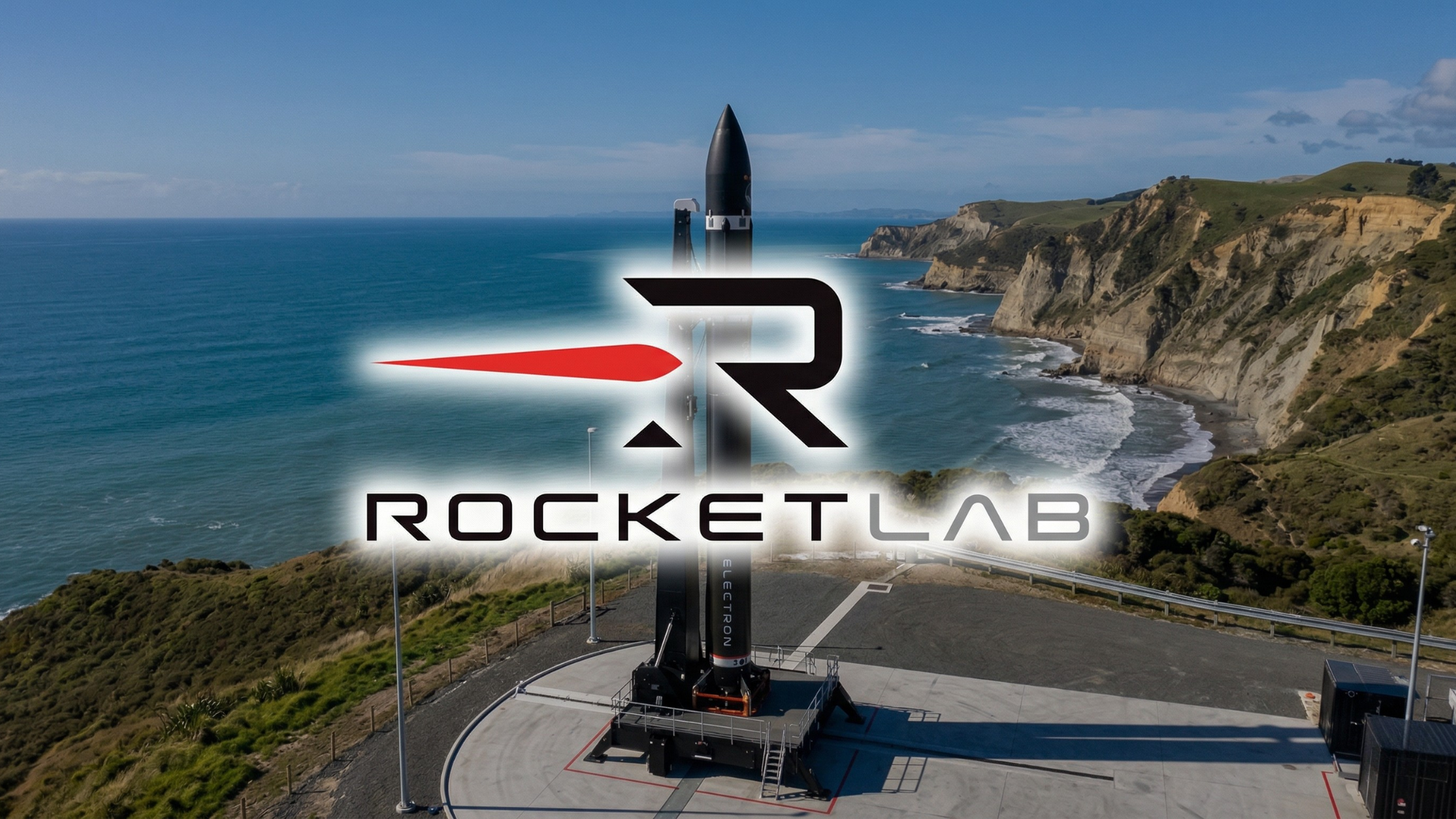
Rocket Lab (NASDAQ: RKLB) has taken a major step in its vertical integration strategy. The company announced that it has received regulatory approval to acquire Mynaric, a leading provider of laser-optical communications terminals for air, space, and mobile applications. The transaction was reviewed and approved by Germany's Federal Ministry for Economic Affairs and Energy and is expected to close in April. The news arrived at an interesting moment: RKLB had fallen close to 30% from its 52-week high, but the market reacted quickly and positively. Shares rallied more than 10% on the announcement, effectively confirming a higher low near $60 and preserving the stock's longer-term uptrend.
So why is this such a big deal? Let's take a closer look.
Rocket Lab Approved to Acquire Mynaric
The Biggest IPO Ever: Claim Your Stake Today (Ad)
What if you could shrink your entire wealth journey from decades down to just 24 hours?
Sounds impossible…
But I’ll show you how Elon Musk is about to make it a reality.
This could be the best investment opportunity of the decade.Rocket Lab has pursued vertical integration for years, acquiring companies and forming partnerships that let it produce more satellite components in-house. That approach reduces supply-chain risk and better serves a growing roster of commercial and government customers. The Mynaric acquisition is a meaningful step in that direction.
As Rocket Lab founder and CEO Sir Peter Beck put it, laser communications are a critical enabler for today's and tomorrow's satellite constellations, and the goal is to make them available at scale.
The deal also establishes Rocket Lab's first European footprint: Mynaric will remain headquartered in Munich, giving Rocket Lab a new base to support German and broader European space programs.
The strategic logic is straightforward. Laser communication offers advantages over traditional radio-frequency systems, including higher data rates, greater security, improved spectrum efficiency, and easier scalability. Yet high-volume, affordable optical terminals have lagged behind market demand, creating a bottleneck for constellation operators. Rocket Lab plans to scale production and implement manufacturing efficiencies to close that gap and give customers greater confidence in on-schedule, on-budget delivery.
What makes the acquisition particularly compelling is that Mynaric is already part of Rocket Lab's ecosystem. Mynaric supplies CONDOR Mk3 optical terminals for Rocket Lab's $1.3 billion prime contracts with the Space Development Agency (SDA) to produce 36 satellites across Transport Layer‑Beta Tranche 2 and Tracking Layer Tranche 3, and it supplies other SDA contracts as well. The two companies share customers across commercial constellation operators, satellite prime contractors, and defense and civil agencies. In short, this is less a new relationship than a deepening of an existing one that underpins some of Rocket Lab's most important programs.
What It Means Going Forward
The Mynaric acquisition reinforces a long-standing thesis: Rocket Lab is no longer just a launch provider. It is evolving into an integrated space systems company capable of designing, building, launching, and now enabling communications across satellite constellations end to end.
For investors watching the aerospace sector, the technical picture is encouraging. The higher low near $60 and the subsequent recovery suggest the market views this as a substantive catalyst. If RKLB can hold above that level and build momentum, the path back toward prior highs could reopen. The Neutron launch timeline and continued execution of the SDA contract remain key catalysts to monitor alongside this acquisition.
This email communication is a paid sponsorship for American Hartford Gold, a third-party advertiser of Earnings360 and MarketBeat.
If you have questions or concerns about your account, feel free to email our South Dakota based support team at contact@marketbeat.com.
If you no longer wish to receive email from Earnings360, you can unsubscribe.
© 2006-2026 MarketBeat Media, LLC. All rights protected.
345 N Reid Pl., Sixth Floor, Sioux Falls, South Dakota 57103-7078. United States..
