
Dear Reader,
Last year I ran for Mayor of New York City.
And lost to a 34-year-old Democratic Socialist.
Now I'm convinced what's starting in New York will spread across America.
Just for starters:
- The new mayor wants to spend $70 million of taxpayer money just to study whether government-run grocery stores are a good idea.
- He's threatening a 9.5% property tax hike on every homeowner in the city.
- And he wants to raise taxes on every corporation and high earner.
This isn't just a New York story. Nearly 40% of Americans now have a "positive" view of socialism.
But what nobody's talking about is WHY this is happening... and where it's all headed.
I have my MBA from Harvard and spend my time in correspondence with billionaires like Warren Buffett and Bill Ackman. I've spent 30 years on Wall Street. And there's a specific term for what's unfolding in America right now... one that points to an economic event unlike anything we've seen in over 100 years.
I'm not running for office again. But if you care about your wealth, your family, and your future, you need to understand what's really coming.
I've put together a free analysis explaining exactly what I see, and the specific steps I recommend you take with your money today.
I strongly encourage you to check it out here.
Regards,
Whitney Tilson
Editor, Stansberry Investment Advisory
Former Hedge Fund Manager
Co-Founder, Teach for America
Harvard MBA
P.S. What's happening today will reset the financial system in a way most of us can't imagine. If I'm even half right, it's going to have a huge impact on your money and your future. Get the details here...
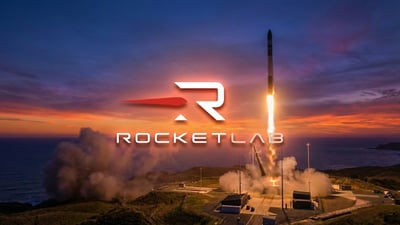
Rocket Lab's NASA Win Tests Key Support After Sharp Pullback
Authored by Ryan Hasson. Originally Published: 6/26/2026.
Key Points
- Rocket Lab’s latest NASA selection for three dedicated Electron launches reinforces its credibility with government science customers even as the stock works through a sharp pullback.
- The sell-off has pushed Rocket Lab below a key technical level, putting more focus on whether the stock can hold near its 200-day moving average.
- Rocket Lab’s fundamentals remain intact, with record first-quarter revenue, a backlog of more than $2.2 billion, and continued contract momentum across civil, commercial and defense markets.
- Special Report: The company SpaceX cannot operate without
Rocket Lab (NASDAQ: RKLB) has had a brutal few weeks. After surging to a 52-week high of $151 in May, the stock reversed sharply and closed at $80.69 on June 25, down nearly 46% from that peak. It has now fallen below the psychologically and technically important $100 level that served as support on the way up, leaving investors wondering where the decline will stop.
Into that backdrop came a meaningful piece of news this week: NASA has selected Rocket Lab for three dedicated Electron launches. The question is whether that catalyst arrives at the right moment to steady the ship.
The NASA Contract Shows Rocket Lab’s Launch Credibility
The $15 Gold Fund That Pays Up to $1,152/Month (Ad)
Gold is hitting record highs, but most investors are leaving income on the table. A $15 fund is quietly paying out up to $1,152 a month to regular investors - no mining stocks, no options, no physical metal required.
Chief Income Strategist Tim Plaehn calls it a breakthrough strategy that transforms gold's rally into reliable monthly payouts. The next distribution is just days away.
Discover the gold income fund before the next payout dateNASA has selected Rocket Lab to provide three dedicated Electron launches supporting two Sun-Earth science missions, PolSIR and TSIS-2, beginning in early 2027. The selection is a meaningful endorsement of Electron's reliability and Rocket Lab's standing as a trusted launch partner for high-value government science missions. PolSIR will study ice clouds in the tropics to improve climate modeling, while TSIS-2 will measure the Sun's energy output and its influence on Earth's climate. These are exactly the kind of dedicated, precision-orbit missions that Electron was built for, and winning them reinforces Rocket Lab's position as a go-to small-launch provider for NASA's science portfolio.
It also speaks to the business's broader strength, which has not changed despite the decline in the share price. Rocket Lab continues to win contracts across commercial, civil, and national security customers at a steady pace, and this NASA selection adds to an already record backlog. The award came alongside news that the company set a record for responsiveness to defense missions, further underscoring the operational momentum behind the scenes.
Rocket Lab’s Technical Picture Looks More Cautious
The chart, however, tells a more cautious story for now. The stock has fallen almost 46% from its 52-week high and, crucially, has broken below the all-important $100 level that previously acted as support. That breakdown shifts the focus to the next major line in the sand for the bulls: the 200-day simple moving average, sitting around $75. That level represents the last significant technical floor before the longer-term uptrend would come into genuine question.
How the stock behaves around that zone in the coming sessions will be telling. A bounce from or near the 200-day SMA could mark a higher low and a base from which the stock attempts to recover. A decisive break below it would be a more concerning signal.
Rocket Lab’s Selloff Reflects Rotation, Not Weak Fundamentals
It is worth understanding that the decline has been driven largely by factors external to Rocket Lab's own performance. The SpaceX (NASDAQ: SPCX) IPO, which debuted on June 12, triggered a wave of profit-taking and rotation across the entire space sector after a powerful run-up into the event. Rocket Lab, which had one of the most impressive surges heading into its listing, has also been hit hard on the downside.
Broader weakness in high-beta names amid an AI-driven market sell-off and uncertainty has added pressure. None of this, however, reflects poor or declining fundamentals for the company, which remain as strong as ever, with record Q1 revenue of $200.35 million, up 63% year over year, a record backlog, and Neutron on track for its debut later this year.
Does Rocket Lab’s NASA Catalyst Come at the Right Time?
One contract, however meaningful, is unlikely to reverse a 46% decline on its own. But the timing matters more than the size. The NASA selection is a reminder, arriving precisely when sentiment is at its weakest, that the underlying business is still executing at a high level and winning the trust of the world's most demanding customers. That kind of fundamental reinforcement can help stabilize a stock that has been driven down by sentiment and rotation rather than by anything the company has done wrong.
Analysts remain bullish on the company overall. The consensus rating among 21 analysts is Moderate Buy, with a price target of $102.76, implying over 20% upside from current levels. For investors, the setup now hinges on that $75 zone. If the 200-day SMA holds and the steady drumbeat of contract wins, such as this NASA selection, continues, the bulls may yet find their footing. If it does not, more patience may be required. Either way, the business behind the stock remains firmly intact, even as the chart works through one of its sharpest corrections in over a year.
3 Overlooked Tech ETFs That Are Quietly Killing It This Year
Submitted by Nathan Reiff. Posted: 6/27/2026.

Key Points
- With dozens of tech ETFs on the market, investors must look closely to distinguish options based on fees, strategy, performance, and other metrics.
- Three easily-overlooked funds focus on momentum tech names, software development, and nanotechnology, respectively.
- PTF, IGPT, and TINY have each returned approximately 70% year-to-date.
- Special Report: The company SpaceX cannot operate without
As the number of tech exchange-traded funds (ETFs) continues to rise alongside investor demand for the sector, it is becoming more difficult for investors to distinguish among the available options. Looking closely at the details—such as unique strategies, portfolio construction, costs, liquidity, and more—can make all the difference for investors seeking to maximize returns while the sector remains hot.
Fortunately, there are plenty of solid choices in the tech ETF space, including several funds that may be overlooked because of their modest asset bases and trading volumes, but that have posted strong performance so far in 2026.
A Momentum Tech Fund With Outsized Returns
I endorsed someone else's model for the first time (Ad)
Porter Stansberry spent 30 years ignoring outside investment systems - until he met Emmet Savage in Dublin. Savage's model, built on Hamiltonian mechanics applied to equity analysis, has delivered nearly 2,000% returns over 17 years with only one losing year.
What convinced Porter wasn't the returns. It was the sell discipline - a framework that identifies the exact moment a position's energy begins to decay, signaling an exit before the decline. He calls it the most rigorous sell system he has ever seen, comparing its edge to RenTech's famed Medallion Fund.
Watch Porter's full breakdown of Project Prophet and Emmet's systemFirst up is the Invesco Dorsey Wright Technology Momentum ETF (NASDAQ: PTF), a passively managed fund that tracks an index of domestic tech stocks. As a broad-based fund, PTF tends to skew toward larger names, and about two-thirds of the portfolio consists of large-cap companies or larger. What defines the basket, however, is momentum—all of the companies in PTF's portfolio have relative strength compared with other equities in the same space.
Because the tech sector routinely offers plenty of room for growth, PTF can be a strong buy-and-hold option for investors looking to lean into tech. The fund rebalances to reflect the areas within the sector with the strongest growth potential. For now, one of those areas is memory and data storage, with some of the largest positions including companies like Sandisk Corp. (NASDAQ: SNDK) and Western Digital Corp. (NASDAQ: WDC). These firms have benefited significantly from higher prices for their products amid a global memory shortage in recent quarters.
PTF is fairly narrow in scope, with only about 40 holdings. The fund also comes with a moderately high price tag, given its annual fee of 0.60%. With under $1 billion in assets and a relatively modest trading volume, active traders may want to keep liquidity in mind. Still, PTF really stands out for performance—this ETF has returned nearly 72% year to date (YTD).
Despite Details Similar to PTF, IGPT Offers a Unique View of Tech
Another fund from Invesco, the AI and Next Gen Software ETF (NYSEARCA: IGPT), provides a view of the tech sector that is substantially different from PTF above. IGPT tracks an index of firms with significant involvement in software development. Notably, the portfolio is spread across semiconductor companies, interactive media and services names, hardware, storage, peripherals, and several other categories.
More than 100 different stocks make up IGPT's basket, though a handful of large-cap tech names like AMD (NASDAQ: AMD) and NVIDIA Corp. (NASDAQ: NVDA) exert a disproportionate influence given allocations of roughly 8% each. Importantly, IGPT is not limited to domestic names, either, although U.S. companies still make up the bulk of the portfolio at more than 75%.
IGPT also shares some of the same considerations as PTF for investors. For instance, the fund's expense ratio of 0.58% is only marginally lower than PTF's, while its asset base and trading volume are not too far off either. Likewise, investors will be happy to see that the two ETFs have posted similar performance this year, with IGPT returning about 69% YTD.
A Fittingly Named Tiny Fund to Address the Easily Missed Nanotechnology Niche
The ProShares Nanotechnology ETF (NYSEARCA: TINY) is, fittingly, a microscopic fund from an asset base perspective. The fund has under $40 million in managed assets and a similarly minuscule trading volume. That alone may be enough to discourage some investors because of the liquidity risks it poses. However, looking beyond that concern, investors will find a unique theme focused on one of the fastest-growing yet often overlooked corners of the tech space: nanotechnology.
Nanotechnology is an increasingly important part of daily life, whether consumers realize it or not, and the roughly 30 positions in TINY's portfolio are all global stocks involved in bringing this technology to market. Investors are unlikely to find many mega-cap tech behemoths here, and they may not encounter many of the positions in TINY's basket in other tech ETFs at all. Only half of the positions are large-cap names, with many of the rest representing much smaller up-and-coming companies.
Of course, this also carries a significant degree of risk, making TINY appropriate only for investors willing to accept those trade-offs. Those who have—and who have been willing to pay the 0.58% annual fee attached to the ETF—have been rewarded with nearly 72% returns YTD, however.
This email content is a paid advertisement sent on behalf of Stansberry Research, a third-party advertiser of The Early Bird and MarketBeat.
This ad is sent on behalf of Stansberry Research, 1125 N Charles St, Baltimore, MD 21201. If you would like to optout from receiving offers from Stansberry Research please click here.
If you have questions about your newsletter, don't hesitate to contact our U.S. based support team at contact@marketbeat.com.
If you no longer wish to receive email from The Early Bird, you can unsubscribe.
© 2006-2026 MarketBeat Media, LLC. All rights reserved.
345 North Reid Place, Sixth Floor, Sioux Falls, South Dakota 57103. U.S.A..
