 A Message From Investors Alley Hi, Tim Plaehn here. Everyone wants to know which AI stocks are going to win. Nvidia? CrowdStrike? Palantir? One of the new IPOs? But picking the single winner out of dozens of contenders is a gambler's game. And I'm not a gambler. I'm an income investor. So here's what I did instead... I stopped picking and bought a single fund that owns all of them. And instead of just holding them and hoping... This fund pays me a 34% annualized distribution rate, delivered every single Thursday… Up to $1,051 a month. I put the full story in a short video presentation… What's inside the fund, how it generates weekly income, and how to collect your next Thursday payout. Watch the free presentation here. To your income, Tim Plaehn
Chief Income Strategist
Investors Alley
Exclusive Story from MarketBeat.com
Don’t Get NVIDIA’s Reflection AI Interest Wrong: Its Moat Could DeepenBy Thomas Hughes. Originally Published: 10/14/2026. 
Key Points
- NVIDIA is reportedly exploring a deal to acquire or expand its stake in Reflection AI, a startup building open-weight foundation models and agentic tools.
- Such a deal would likely reinforce NVIDIA's hardware-centric moat rather than shift its strategy, though it could draw regulatory scrutiny similar to its Groq arrangement.
- With a consensus Buy rating from 55 analysts and roughly 40% implied upside, NVIDIA heads into its Nov. 18 earnings report amid decelerating but still strong growth forecasts.
- Special Report: The side of the market that sells protection
Being AI-lab agnostic has long been a pillar of NVIDIA’s (NASDAQ: NVDA) strategy. Selling to all labs creates a deep moat, making the question of which one wins moot: NVIDIA always wins because it sells hardware, ecosystems and services to the industry. Currently, that moat is based largely on silicon, but it deepens with every advancement along the stack, entrenching the company’s position as a comprehensive, universal AI development ecosystem. So, what happens when the company breaks out of its mold? Speculation is running rampant that this is becoming increasingly likely. NVIDIA is reportedly in early talks to acquire Reflection AI or increase its investment in the startup. Reflection AI is a newer company founded by former Alphabet (NASDAQ: GOOGL) DeepMind researchers.
Reflection AI focuses on open-weight foundation models, which aren't necessarily fully open source, and agentic software tools that democratize AI. Governments, enterprises and AI labs can download the software, own it, customize it and run AI models on their own hardware. Offerings include Beam, which focuses on coding, reasoning and agentic tasks, and Asimov, an agentic tool that helps developers answer complex questions about software systems. NVIDIA’s Moat Will Deepen If It Acquires Reflection AIInvestors should note that this move wouldn't necessarily alter NVIDIA's strategy; it could strengthen it. Owning a developer of open-weight AI tools would help NVIDIA deepen its moat. Making AI models more widely accessible keeps the focus on its hardware and ecosystem, rather than on which model developer wins. The likely outcome is that model developers and, more importantly, inference providers will continue investing in NVIDIA technology as demand for AI-enabled enterprise and consumer services grows. It's not just about the models but also the equipment used to run them. Models are already a dime a dozen; the question for businesses and consumers is which ones to use and how to access them. This move could cement, secure and strengthen NVIDIA’s revenue and earnings outlook as the AI industry expands. And NVIDIA isn’t new to the business. NVIDIA previously made an $800 million direct investment in Reflection AI, anchoring a $2 billion funding round that valued the company at $8 billion. The partnership not only provides Reflection AI with capital but also strengthens its ties to NVIDIA's GPU ecosystem, which the startup uses to train its models. Nebius Group (NASDAQ: NBIS) is another critical player, having secured a $1 billion contract from Reflection AI for cloud capacity and services. The question of whether owning a model maker would give NVIDIA a new revenue stream or strain its relationships with AI labs remains open. NVIDIA may be more interested in Reflection AI for its position in the AI ecosystem than for its revenue. If NVIDIA wants to keep low-cost, open-weight AI models under Western control, an acquisition could be strategically valuable. The risk is that China emerges as the leader in low-cost models, leading the industry toward its hardware and ecosystem rather than NVIDIA’s. 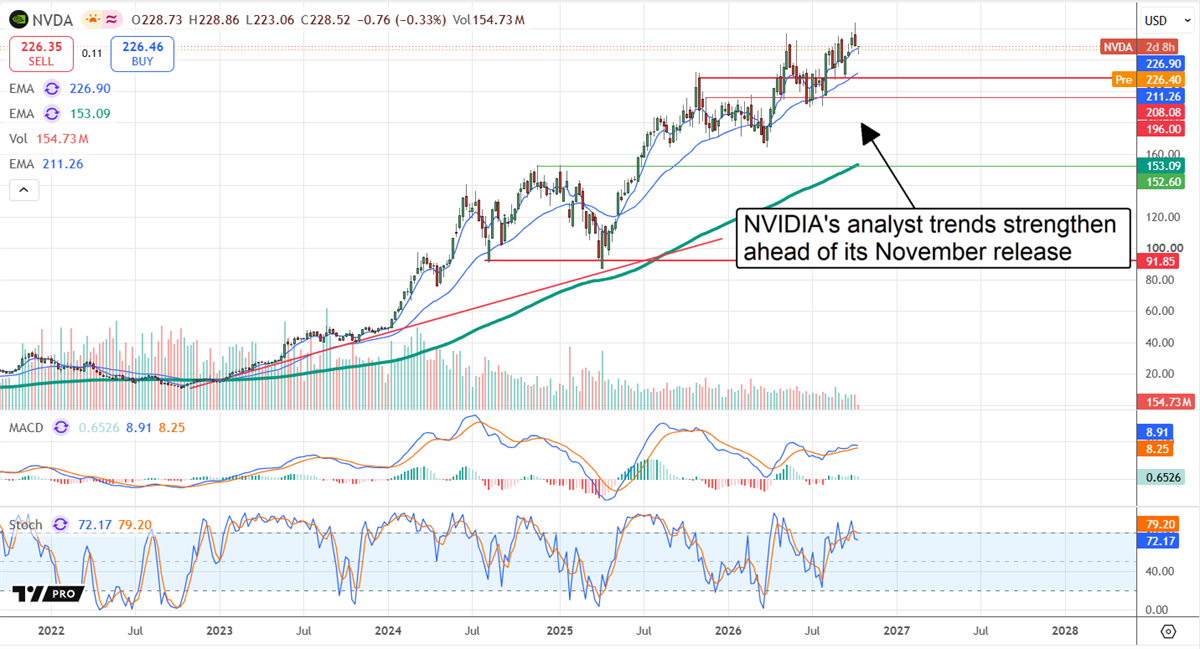
NVIDIA Will Control Reflection AI, the Only Question Is How?The most important question is how the deal might be structured. Investors should consider the possibility of a nonstandard workaround, such as a hire-to-acquire strategy, although even that is not assured. NVIDIA may simply hire Reflection AI’s staff and license its technology, potentially avoiding a lengthy merger review without necessarily escaping regulatory scrutiny. Regulatory oversight also poses risks, as authorities have already expressed interest in other deals. NVIDIA licensed technology from Groq and hired several of its executives, a company also started by Alphabet engineers, in a similar arrangement. That move raised questions from lawmakers about whether NVIDIA intentionally avoided regulatory oversight. Those raising concerns include Senators Elizabeth Warren and Richard Blumenthal, who argue that NVIDIA’s AI dominance may pose a threat to competition. In this environment, the company will have to carefully address regulatory concerns. Analysts remain bullish on NVIDIA, although the potential deal’s impact remains uncertain. The acquisition could represent an extension of NVIDIA's strategy rather than a strategic shift. The stock carries a consensus Buy rating from the 55 analysts tracked by MarketBeat, with a consensus price target suggesting more than 40% upside from mid-October trading levels. NVIDIA’s next visible catalyst is its upcoming earnings report. Expected around Nov. 18, the report is forecast to show a deceleration to approximately 90% year-over-year growth in revenue and earnings. The company consistently outperforms estimates and could do so again this quarter. Global investment in AI infrastructure across industries continues to drive demand for its core products. Investors will be watching growth, as well as profitability, cash flow and capital returns, which have been accelerating. . |


